MACI or ACI

“If you can make it to the new year, this is our best option.”

In the first quarter of 2017, the FDA approved Matrix-Induced Autologous Chondrocyte Implantation (MACI) for use on articular cartilage defects of the knee joint in the US. Insurance companies, as usual, lagged behind for coverage of all defects.

MACI replaced the ACI procedure that had been in use for quite a few years. The greatest difference between these two procedures is that MACI utilizes a man-engineered matrix to load healthy cells into your defect, whereas ACI mostly utilizes your own tibial periosteum to hold the healthy cells. Both procedures require an initial surgery to take a biopsy of healthy tissue that can be used to develop these cells which can mature anywhere from 12-18 months. Both procedures are also frequently coupled with an osteotomy or anteromedialization.

The goal of the MACI or ACI surgery coupled with an osteotomy of the tibial tubercle is to move the weight bearing surface of the joint away from the defect. Almost like a semi-safety net that should allow for a decrease in pain and other symptoms just in case the graft ends up failing.

None of this was explained to me. As I peppered my doctor with a multitude of questions on what procedure would result in the best outcome for my specific defect area, he insisted that the revolutionary aspect of MACI was my best option with the highest chance of success.

While beginning my research, I believed an 85% success rate was good enough for me, but I had tunnel vision. Everything leading up to hearing about MACI has been the worst case scenario that was presented. I didn’t consider many of the things that could go wrong committing to a procedure that was just brought overseas.

And so I left 2016, and the 16th year of my life looking forward to the next year. It would only take two surgeries, and a solution was in sight. It wasn’t experimental, it was medicine. Little did I know.
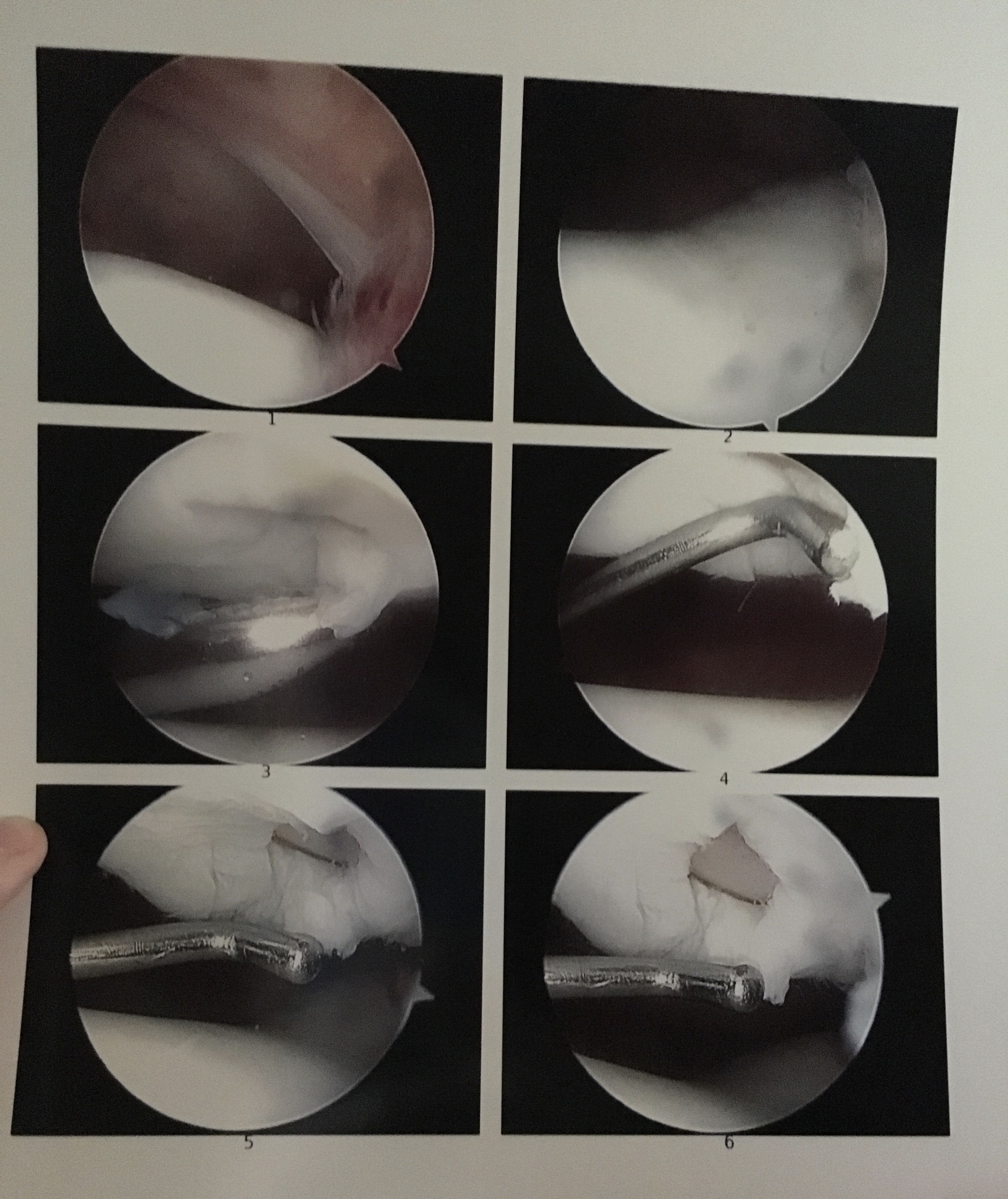
Surgery 1/4

I remember Columbus Day 2016 like it was yesterday. What a weird statement to make. Who remembers Columbus Day?

Besides having no school that day, it was also the first time I was seeing my doctor in about 3 months. I was beyond nervous. How was I going to convince him that I needed surgery when my MRI was inconclusive and my only symptom was this unreachable pain, but at 16 I knew how to advocate for myself. Hesitantly, he scheduled me for a scope and debridement less than a month later.

While I was excited to finally have answers, I prayed that my volleyball season would be over by the November 4th surgery date. I was nearly in tears any time I jumped and landed. I couldn’t take the 3 jogs we made across the court because I was just too afraid to start the stabbing sharp pain. My vertical was limited and my speed had decreased. But I still loved my team and the sport. I just wanted to give it everything I could.

Lucky for me, our season ended just two days before my first surgery. But damn, I wish someone would’ve told me it would be the last game I would ever play.

The morning of surgery, I not only couldn’t recognize any of the wording on the pre-op paperwork, I didn’t recognize my doctor. I promised myself that if this surgery didn’t solve the problem, I needed to be more familiar with my injury, and oh was I in for a surprise.

Waking up post surgery, I kept reaching at my knee in recovery, trying to feel what they had put on it in hopes that I could determine what was wrong. While I couldn’t feel anything besides the stiff ice wrap, I didn’t have to wait long to find out what was actually wrong.

It was the worst case scenario. An injury my doctor had mentioned, but had not anticipated to this scale. My knee was cleaned out, but with little hope that my pain would improve, and a small biopsy of healthy tissue was taken in order to prep for the possibility of a more extreme and experimental surgery. I was officially diagnosed with what I most feared: a grade 4 articular cartilage defect of the patella. The most difficult to treat, and one of the most painful defect locations.

I had to prepare myself for an injury I could barely understand, and I could tell from the tone in my doctor’s voice, that mine and his relationship was going to be a long-term one.